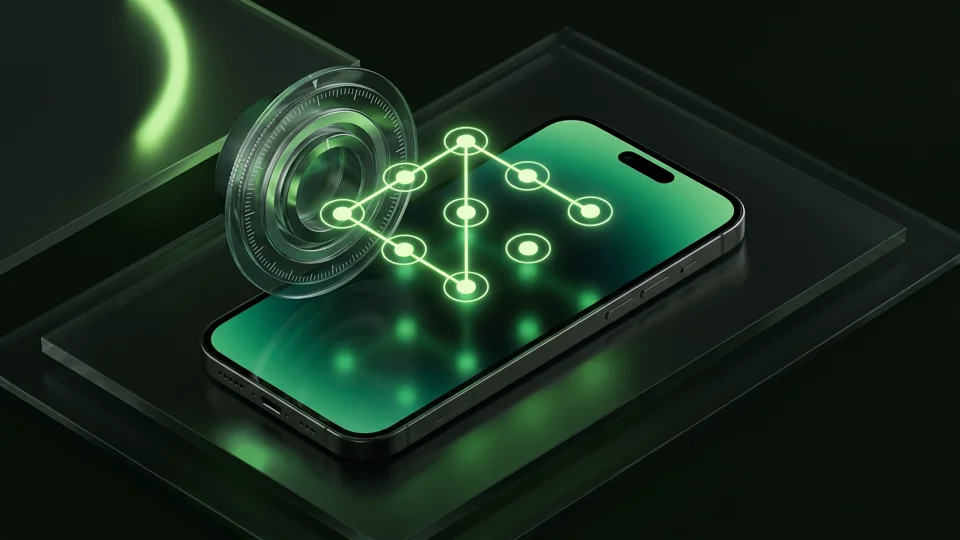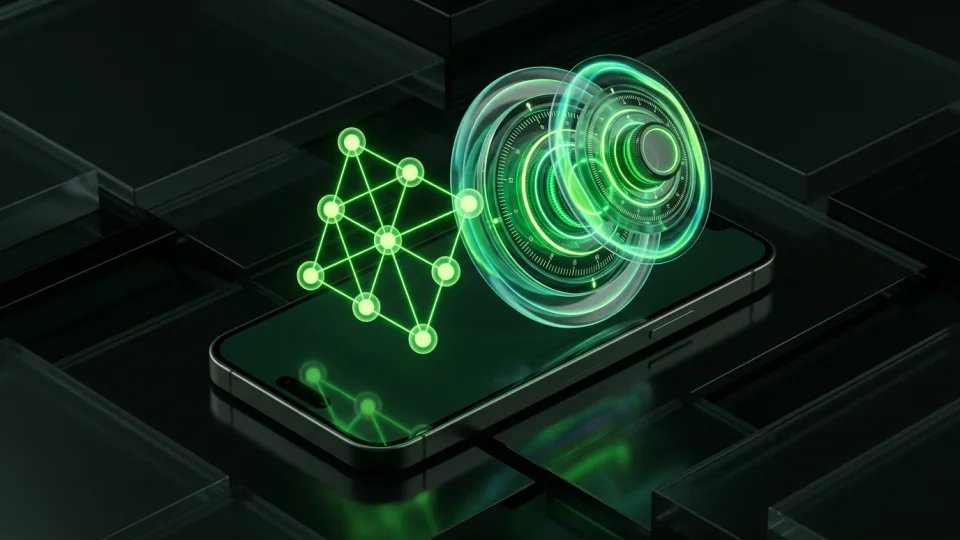
Test any sample PIN length, passphrase structure, 3×3 pattern length, or safe combination dial to see its exact mathematical search space ($2^n$ bits of entropy) and how key derivation plus a device-bound iOS Keychain key changes offline attack cost.
Never type your real production passwords into any website
Although this calculator runs 100% locally in your browser with zero network calls, good security hygiene means testing structural examples (like a similar-length phrase or pattern) rather than pasting a live credential.
| Unlock Method | Typical Search Space | Security Characteristics |
|---|---|---|
| 4–8 Digit PIN | 10,000 (13.3 bits) to 100,000,000 (26.6 bits) | Fast for daily unlock; relies on device-bound Keychain key to prevent offline guessing |
| 3×3 Pattern Lock | Up to 389,112 valid paths (~18.6 bits) | Quick muscle-memory gesture; strongest when 6–9 nodes long |
| Safe Combination Dial | 3–4 stops across 0–99 (~20 to 26.6 bits) | Tactile rotary entry that resists casual over-the-shoulder glances |
| Multi-Word / Long Passphrase | 50 to 80+ bits of entropy | Highest mathematical resistance against all brute-force scenarios |
Why unlock entropy and device-bound keys work together
A short 4-digit PIN only has 10,000 possible combinations. If an app simply hashes a 4-digit PIN and uses it directly to encrypt a file, an attacker who extracts that file onto a desktop GPU cluster can test all 10,000 possibilities in milliseconds.
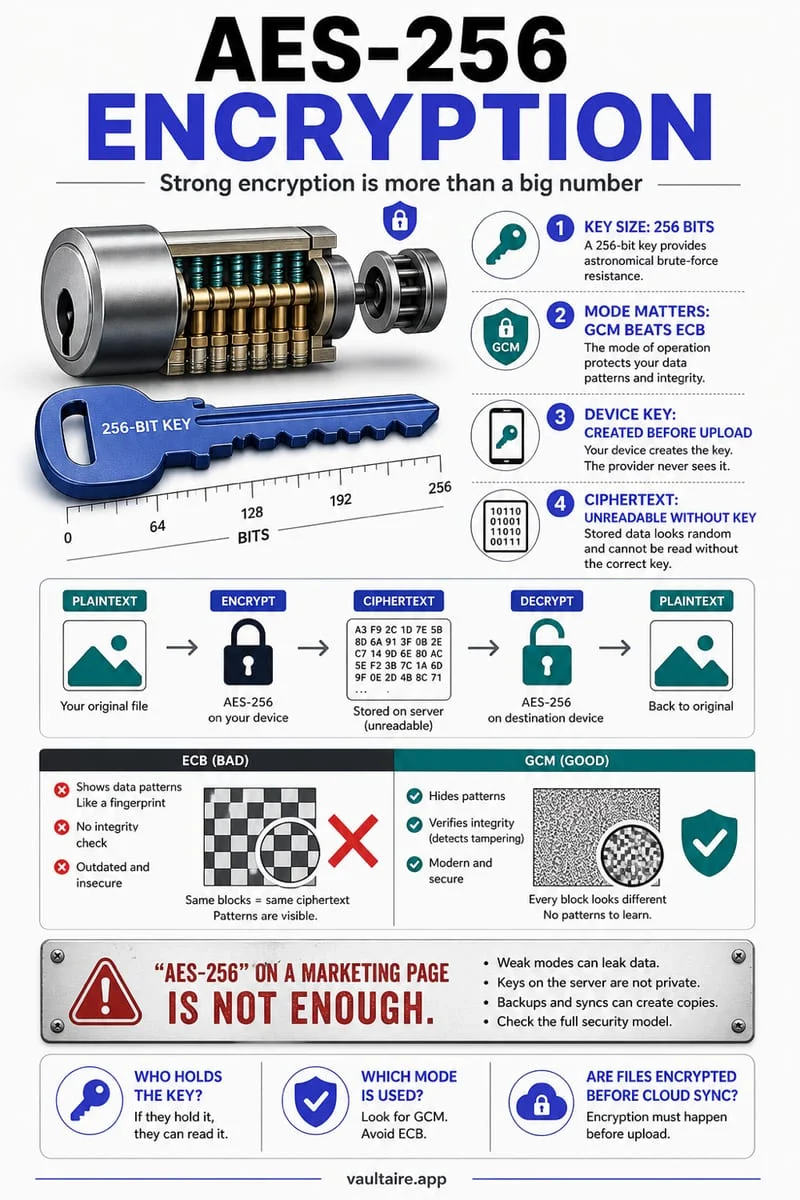
Octoshield combines your chosen unlock secret with a device-bound iOS Keychain key and encrypts files in chunks with AES-256-GCM. When you want the strongest secret independent of everything else, choosing a long, unique passphrase in Octoshield adds high mathematical entropy on top of the device boundary.
Frequently asked questions
01Which lock method in Octoshield is the strongest?+
A long, unique passphrase provides the highest mathematical entropy. Octoshield also supports a PIN, 3×3 pattern, and safe-style combination dial, plus optional Face ID / Touch ID.
02Does this calculator record what I type?+
No. All math runs locally in your browser's memory and disappears as soon as you clear the input or close the tab.