Multi-Agent Coding Security: How to Govern Claude, Codex, and Copilot Together
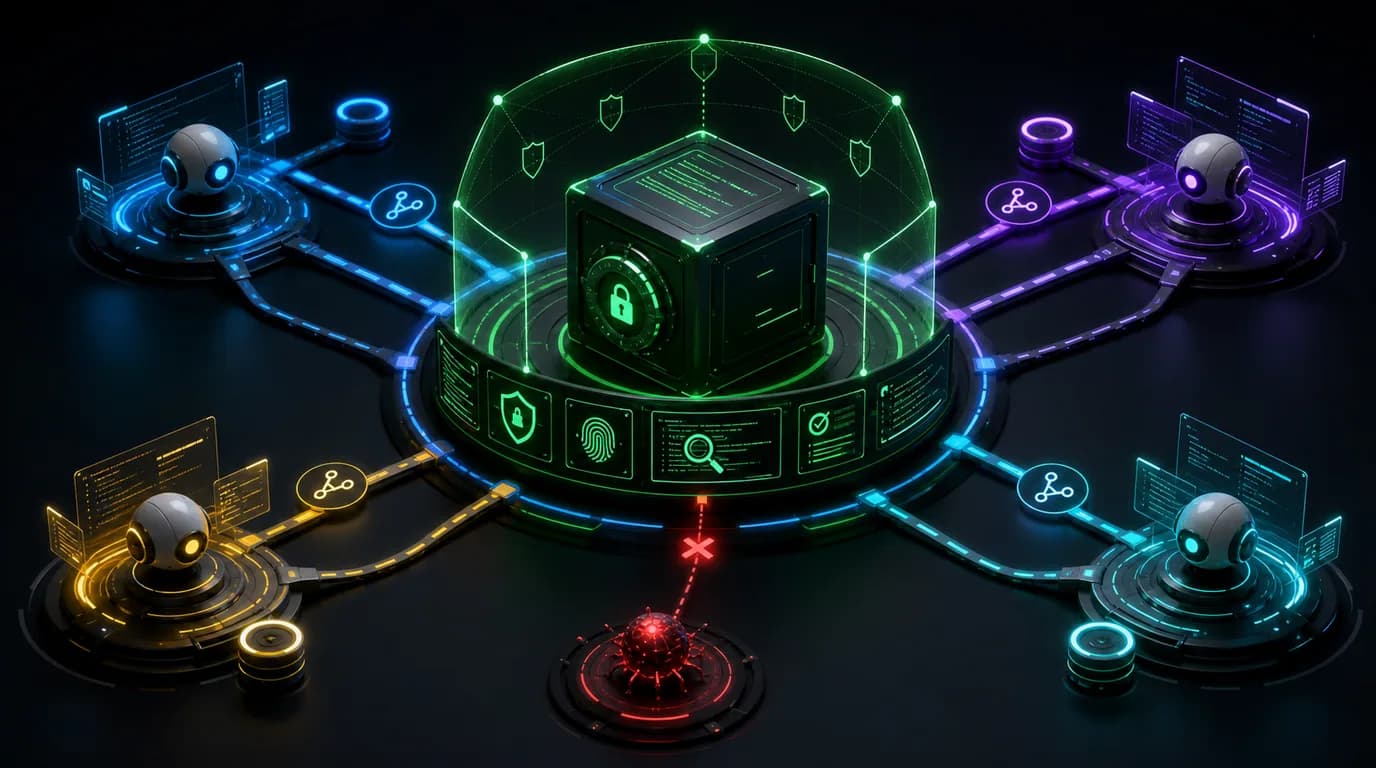
Multi-Agent Coding Security
Development teams can now assign the same issue to multiple agents, run specialized sub-agents in parallel, and compare draft pull requests before choosing an implementation. GitHub supports Claude, Codex, and Copilot agents within shared repository workflows, while frontier models increasingly delegate their own subtasks.
Multi-agent work improves speed and coverage. It also multiplies identities, tool calls, temporary files, and opportunities for a secret to cross a boundary.
New Risks Introduced by Multiple Agents
Shared Context Contamination
One agent may place sensitive output in a file that another agent reads. Scratch notes, test logs, and generated fixtures become an indirect communication channel.
Conflicting Changes
Parallel agents may edit the same authorization or configuration files with different assumptions. A merge can preserve the least secure part of both implementations.
Permission Amplification
Agents with different integrations may collectively reach more systems than any one agent. The workflow’s effective permission is the union of every connected capability.
Reduced Accountability
When several agents and humans touch a patch, it becomes harder to answer who introduced a dependency, secret, or risky configuration.
A Secure Control Plane
Treat every agent as a separate non-human contributor:
- Give each session a distinct identity.
- Use isolated branches or worktrees.
- Scope repository access to the task.
- Keep network and external writes approval-based.
- Preserve tool calls and session logs.
- Run security checks on each agent’s output.
- Re-run checks after combining changes.
Scanning individual branches is necessary but insufficient. The final merged result can create a vulnerability that did not exist in either branch independently.
Secret Handling Across Agents
Do not use a shared plaintext credential file as the easiest way to make every agent’s tests pass. Prefer short-lived, task-specific credentials injected only into the process that needs them.
If one agent discovers a credential:
- Stop propagation to other sessions.
- Determine whether the value was real.
- Rotate it if exposure cannot be ruled out.
- Remove it from every worktree and artifact.
- Scan Git history and generated logs.
Octoshield adds repository credential monitoring to this workflow so teams can catch secrets introduced by humans or agents before they quietly spread across branches.
Human Review Still Matters
Agents are useful reviewers, but high-impact changes need accountable human approval. Prioritize manual review for:
- Authentication and authorization.
- Payment and billing logic.
- Infrastructure permissions.
- Encryption and key management.
- Dependency installation scripts.
- Data deletion and migration.
Sources and Further Reading
- GitHub: Claude and Codex in Copilot workflows
- GitHub Docs: Third-party coding agents
- OpenAI: Running Codex safely
Conclusion
Multi-agent development should resemble a well-governed engineering team, not a room full of administrators sharing one password. Separate identities, restricted permissions, isolated work, complete logs, secret scanning, and final human review let teams gain parallel speed without losing control.
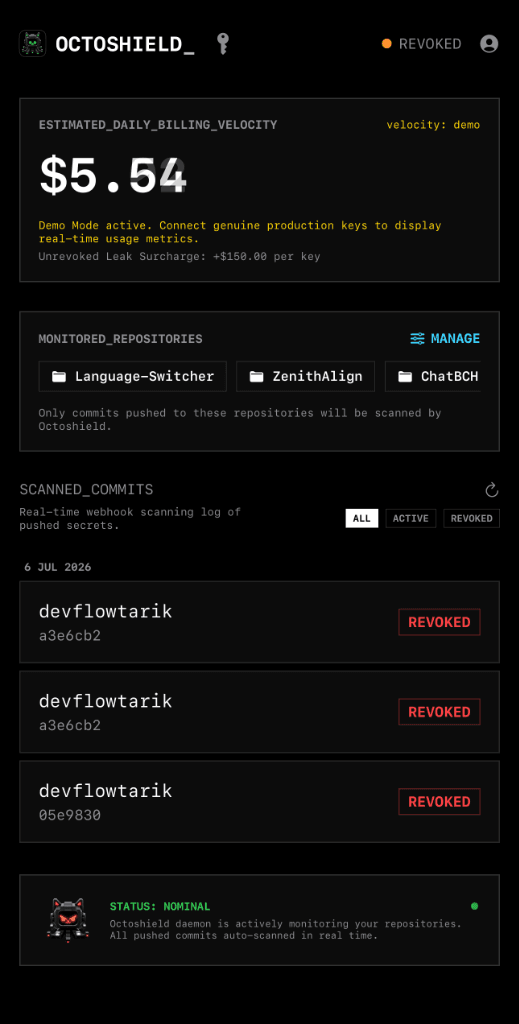
Octoshield in your pocket.
Monitor leaks and manage credentials on the go with our native iOS app.