The API-as-a-Product Model for Gravity-Defying Transportation Systems: Monetization and Security

The API-as-a-Product Model for Gravity-Defying Transportation Systems: Monetization and Security
The commercialization of antigravity technology has birthed an entirely new logistics paradigm. We are no longer limited by terrestrial roads or aerodynamic drag. Levitating cargo networks and frictionless orbital launch systems have reduced global shipping times from weeks to minutes. But the true revolution isn't just physical—it's digital. The infrastructure powering these networks is entirely software-defined, driven by complex, highly monetizable Application Programming Interfaces (APIs).
Welcome to the era of API-as-a-Product gravity tech. Companies that control the gravitational arrays are not just selling transportation; they are leasing physical spacetime as an API endpoint.
In this article, we will unpack the strategies for antigravity transport monetization, the critical necessity of secure transportation APIs, and the advanced rate limiting techniques required to prevent physical network collapse.
The Paradigm Shift: Physics as an Endpoint
Historically, an API allowed a developer to retrieve data (e.g., weather forecasts) or execute a digital transaction (e.g., process a credit card). In the antigravity sector, a REST API call physically alters the universe.
A logistics company like FedEx or Maersk no longer builds its own gravity-repulsion engines. Instead, they lease access to a global network of gravity nodes. Their fleet of levitating cargo containers sends an API payload:
json snippetPOST /api/v2/transport/corridor
{
  "container_id": "CNT-8942",
  "mass_kg": 15000,
  "route": ["JFK-NODE", "LHR-NODE"],
  "priority": "express",
  "repulsion_coefficient": 0.98
}
The infrastructure provider processes this request, aligns the gravitational nodes across the Atlantic, nullifies the cargo's mass, and bills the logistics company per kilometer and per microjoule of energy expended.
This is the ultimate evolution of the API economy.
Monetization Vectors in Gravity APIs
- Mass-to-Distance Billing: The standard tier. Charging based on the mass of the object and the distance it is propelled through a neutralized gravity corridor.
- Priority Pathway Leasing: Premium tiers that guarantee zero latency in node synchronization, ensuring uninterrupted high-speed transit for perishable or critical goods.
- Stabilization Subscriptions: For delicate manufacturing or scientific payloads, companies subscribe to "Hyper-Stable" APIs that guarantee absolute zero-vibration transit, compensating for external seismic or atmospheric anomalies in real-time.
The Security Imperative: When Software Bugs Cause Kinetic Disasters
While antigravity transport monetization is highly lucrative, the risk profile is unprecedented. A compromised payment API might cost a bank millions. A compromised secure transportation API could cause a 15-ton cargo container traveling at Mach 4 to abruptly regain its mass over a populated area.
1. Insecure Direct Object References (IDOR)
In a standard web app, an IDOR vulnerability might allow User A to view User B's private messages by changing a URL parameter (e.g., /api/messages/123 to /api/messages/124).
In gravity logistics, an IDOR is catastrophic. If a logistics competitor discovers an IDOR in the routing API, they could alter the container_id in their payload to assume control of a competitor's cargo. They could issue a DELETE /api/v2/transport/corridor/CNT-8942 command, dropping the competitor's cargo out of the levitation network.
Strict, cryptographically bound access control checks (Attribute-Based Access Control - ABAC) must be enforced at every single endpoint to guarantee that the requesting entity has absolute cryptographic ownership of the physical object it is trying to manipulate.
2. Payload Integrity and Tampering
When dealing with kinetic systems, the integrity of the data payload is as critical as the authentication of the sender.
If a Man-in-the-Middle (MitM) attacker intercepts the JSON payload and modifies the "mass_kg" from 15000 to 1500, the gravity network will allocate exactly one-tenth of the required repulsion energy. The container will instantly plummet.
All payloads must be digitally signed (e.g., using JWS - JSON Web Signatures) and verified at the API Gateway before the command is ever passed to the physical Operational Technology (OT) layer.
Advanced Rate Limiting for Physical Constraints
In the digital world, a DDoS attack overwhelms a server's CPU or RAM. We mitigate this with standard HTTP rate limiting (e.g., 1000 requests per minute per IP).
In the physical world of API-as-a-Product gravity tech, a DDoS attack overwhelms the physical laws of thermodynamics. If a malicious actor sends 10,000 legitimate, fully authenticated API requests to activate 10,000 cargo levitation nodes in a single 1-mile radius, the local power grid will collapse, and the intersecting gravity fields will create a destructive spatial shear.
1. Spatially-Aware Throttling
Secure transportation APIs require rate limiting algorithms that understand physical geometry. The API gateway must maintain a real-time, 3D map of active gravity corridors.
If a new API request attempts to instantiate a levitation field that mathematically intersects or draws too close to an existing field, the API must reject the request with a 429 Too Many Requests (Spatial Overlap) status code, regardless of the user's API quota.
2. Energy-Bound Rate Limiting
API quotas cannot be based solely on the number of HTTP requests. They must be bound by total energy consumption.
A user might have a tier allowing 100 requests per hour. However, if their first request is to lift a 50,000-ton skyscraper foundation, that single API call might consume their entire energy quota for the month. Rate limiting algorithms must pre-calculate the physical energy required for the payload before authorizing the HTTP response.
The Strategic Roadmap for CTOs
For tech executives pivoting their infrastructure into the antigravity transport monetization space, the architectural requirements are steep:
- Treat Physics as a Security Perimeter: Your API Gateway is no longer just a digital proxy; it is a physical safety valve. Integrate your API management platform directly with your OT (Operational Technology) sensor network to enable spatially-aware and energy-bound rate limiting.
- Implement Cryptographic Payload Signing: Mandate that all clients sign their API payloads. A single flipped bit in a mass calculation can result in a kinetic disaster. Use robust standards like JWS.
- Eradicate IDOR Vulnerabilities: Conduct rigorous penetration testing focused specifically on broken object-level authorization (BOLA/IDOR). Implement zero-trust, attribute-based access controls to ensure a client can only manipulate the exact physical assets they legally own.
- Design for Graceful Physical Degradation: If your API goes offline or is subjected to a DDoS attack, the physical systems must fail gracefully. Gravity nodes should slowly dial down their repulsion coefficients over minutes, rather than instantly dropping payloads if the API heartbeat is lost.
Conclusion
The API-as-a-Product gravity tech revolution is transforming the very fabric of global commerce. By monetizing access to localized spacetime manipulation, we are unlocking unprecedented efficiencies.
However, the responsibility placed on secure transportation APIs is monumental. By treating rate limiting as a physical constraint rather than a digital quota, and by applying ruthless cryptographic integrity to every single payload, we can ensure that the skies remain safe, efficient, and highly profitable.
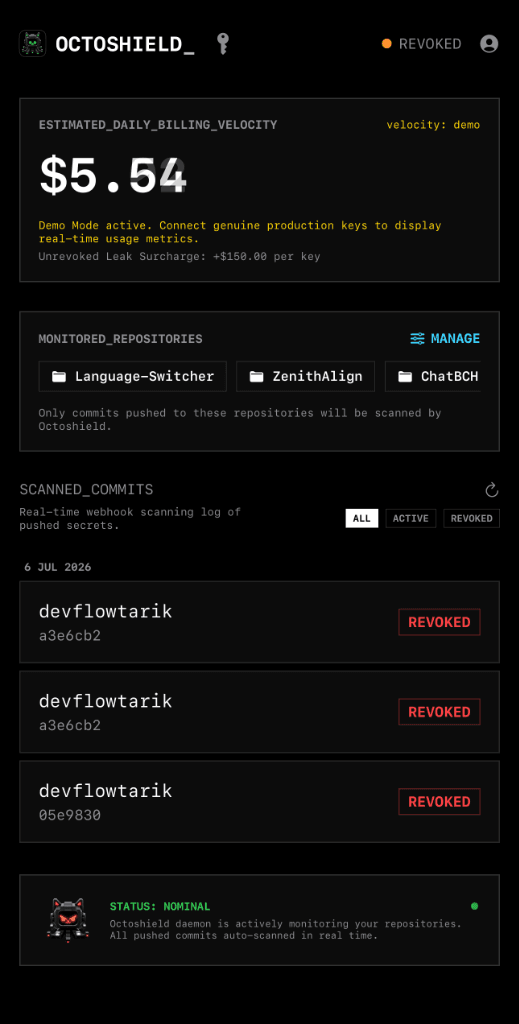
Octoshield in your pocket.
Monitor leaks and manage credentials on the go with our native iOS app.