GraphQL vs. REST API Vulnerabilities in High-Energy Gravitational Wave Simulations
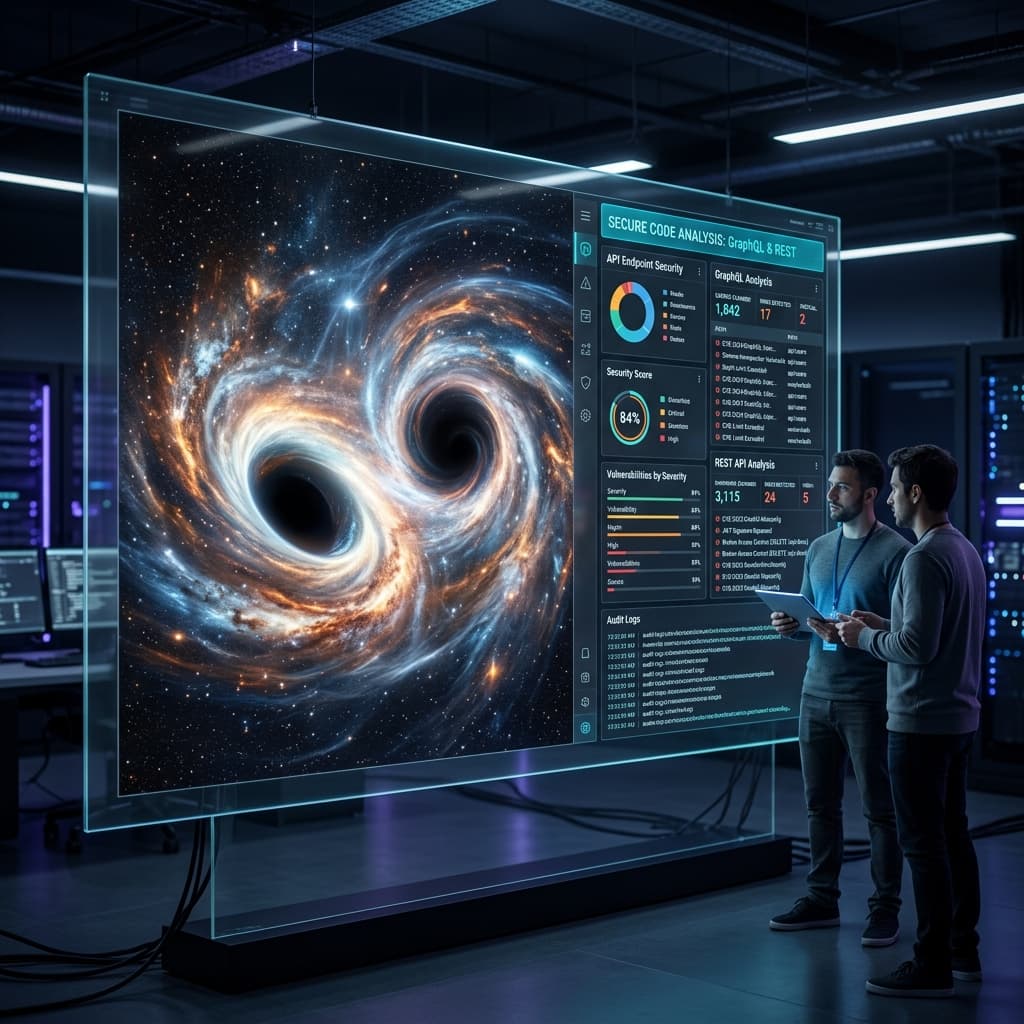
GraphQL vs. REST API Vulnerabilities in High-Energy Gravitational Wave Simulations
The quest to master gravity begins long before a physical reactor is built. It starts in the realm of hyper-advanced supercomputing, where scientists simulate the collision of black holes, the warping of spacetime, and the intricacies of localized gravity nullification. These simulations require petabytes of complex, deeply nested data.
To grant research institutions and commercial R&D labs access to this computational power, data providers expose powerful interfaces: the gravitational wave simulation API.
The architectural debate over whether to use REST or GraphQL for these massive datasets is fierce. While both have their merits, they introduce entirely different threat landscapes into the world of high-energy physics. In this technical analysis, we will contrast REST API security with the unique GraphQL vulnerability profile when handling sensitive gravity data.
The Scale of Gravitational Simulation Data
A single gravitational wave simulation is not a flat table of data. It is a 4-dimensional tensor field representing the curvature of spacetime across billions of localized points over time.
Researchers need to query extremely specific subsets of this data. For example: "Give me the stress-energy tensor readings for Sector 4, specifically during the 3 milliseconds before the simulated singularity collapse, but only the data points where the local time dilation exceeded a factor of 1.5."
Why GraphQL Seems Perfect (And Dangerous)
GraphQL was designed exactly for this type of complex, nested querying. Instead of making 50 different REST API calls to various endpoints to piece together the data, a researcher can send a single GraphQL query specifying exactly the shape and depth of the data they need.
However, giving the client the power to define the query shape is a massive security risk when the underlying database contains the computational secrets to antigravity.
The Intellectual Property Threat
In the modern arms race for commercial antigravity, simulation data is highly classified intellectual property. A competitor doesn't need to steal a physical prototype; if they can exfiltrate the exact simulation parameters that led to a stable gravity well, they can replicate the technology. The API is the primary attack vector for corporate espionage.
GraphQL Vulnerabilities in Gravity Data
When exposing a gravitational wave simulation API via GraphQL, the primary threat is not necessarily injection (like SQLi), but rather resource exhaustion and excessive data exposure.
1. The Deep Query Denial of Service (DoS)
Because simulation data is deeply nested (Galaxies -> Star Systems -> Planets -> Gravity Grids -> Sensor Nodes -> Tensor Readings), an attacker can craft a malicious GraphQL query that requests data recursively.
graphql snippetquery MaliciousSimulationQuery {
  simulation(id: "SIM-994") {
    gravityGrids {
      nodes {
        tensorReadings {
          node {
            tensorReadings {
              node {
                # ... infinite recursion ...
              }
            }
          }
        }
      }
    }
  }
}
When the server attempts to resolve this query, the supercomputer's CPU and memory will spike, attempting to pull billions of records into a single JSON response. This effectively shuts down the simulation engine, halting all R&D.
Mitigation:
- Query Depth Limiting: Strictly enforce a maximum depth for GraphQL queries (e.g., maximum depth of 4).
- Query Cost Analysis: Assign a "cost" to every field in the GraphQL schema. A query requesting a simple string has a cost of 1. A query requesting a complex physics tensor has a cost of 100. Reject any query that exceeds a predefined maximum cost before execution.
2. Introspection and Schema Leakage
By default, many GraphQL implementations have "Introspection" enabled. This allows anyone to query the API and ask, "What queries and data types do you support?"
In a high-stakes gravity data environment, the schema itself contains trade secrets. The names of the fields (e.g., experimentalDarkMatterCoefficient, warpStabilizationMetric) reveal the exact research vectors the lab is pursuing.
Mitigation: Always disable GraphQL Introspection in production environments. Use tools like GraphQL Armor to obfuscate the schema.
REST API Security in High-Energy Physics
While REST APIs don't suffer from the complex query parsing vulnerabilities of GraphQL, they present their own challenges when dealing with massive simulation datasets.
1. Over-Fetching and Broken Object Level Authorization (BOLA)
Because REST endpoints return fixed data structures, a researcher might hit an endpoint like /api/v1/simulations/994/nodes/12 and receive an entire JSON object containing 50 fields, even if they only needed 2. This is over-fetching.
The critical REST API security vulnerability arises when developers fail to implement strict authorization checks on every single object ID requested. If Researcher A is authorized to view Simulation 994, but changes the URL to /api/v1/simulations/995, does the server check if Researcher A has clearance for Simulation 995?
In high-energy physics, different simulation runs often have different security clearances (e.g., civilian transport vs. classified military propulsion). BOLA vulnerabilities are the number one cause of data leaks in REST architectures.
2. The Pagination Exhaustion Attack
To prevent returning petabytes of data in a single REST call, developers implement pagination (?page=1&limit=100).
However, attackers can exploit poor pagination implementations. If an attacker requests ?limit=100000000, and the database attempts to load that many records into memory to serve the response, the database crashes. Alternatively, if the attacker requests ?page=9999999 in a traditional OFFSET-based database query, the database must scan millions of rows just to skip them, causing massive CPU load.
Mitigation:
- Enforce strict, hardcoded maximums on
limitparameters. - Use Keyset Pagination (cursor-based pagination) instead of OFFSET-based pagination for massive physics datasets to guarantee $O(1)$ query performance regardless of how deep the user paginates.
Data Exfiltration via Rate Limits Even if rate limiting is enforced (e.g., 100 requests/minute), an attacker can slowly "scrape" the entire simulation dataset over weeks. In sensitive R&D environments, engineering teams must implement behavior analytics to detect "low and slow" data exfiltration patterns typical of nation-state actors.
The Strategic Roadmap for CTOs
For engineering leaders managing the infrastructure of advanced physics simulations, choosing between REST and GraphQL requires a careful security calculus.
- Adopt a Hybrid Approach (BFF Pattern): Do not expose your raw GraphQL supercomputer interface to the public internet. Implement a Backend-For-Frontend (BFF) layer using REST. The BFF exposes highly restricted, purpose-built REST endpoints to the researchers, and internally translates those into safe, pre-validated GraphQL queries against the physics engine.
- Implement API Contract Testing: Regardless of REST or GraphQL, the API contract must be rigorously tested in CI/CD. Use automated DAST (Dynamic Application Security Testing) tools designed specifically for APIs to fuzz inputs and test for BOLA and DoS vulnerabilities on every commit.
- Enforce Strict Resource Quotas: In high-energy physics, data is massive. Enforce strict timeouts, memory limits, and query cost limits at the API Gateway level to ensure no single researcher (or attacker) can monopolize the supercomputer's resources.
- Encrypt Data at Rest and in Transit: Simulation data is the blueprint for the future. Ensure that all API payloads, whether GraphQL JSON or REST responses, are encrypted using modern TLS 1.3, and that the underlying databases utilize robust at-rest encryption.
Conclusion
The architecture of your gravitational wave simulation API dictates the pace of your research and the security of your intellectual property. GraphQL offers unparalleled flexibility for querying complex gravity data, but introduces severe risks of resource exhaustion and schema leakage. REST offers a simpler security model but struggles with over-fetching and pagination scale.
By understanding the distinct REST API security paradigms and the unique GraphQL vulnerability landscape, engineering teams can architect APIs that empower scientists to unlock the secrets of the universe, without handing those secrets to the competition.
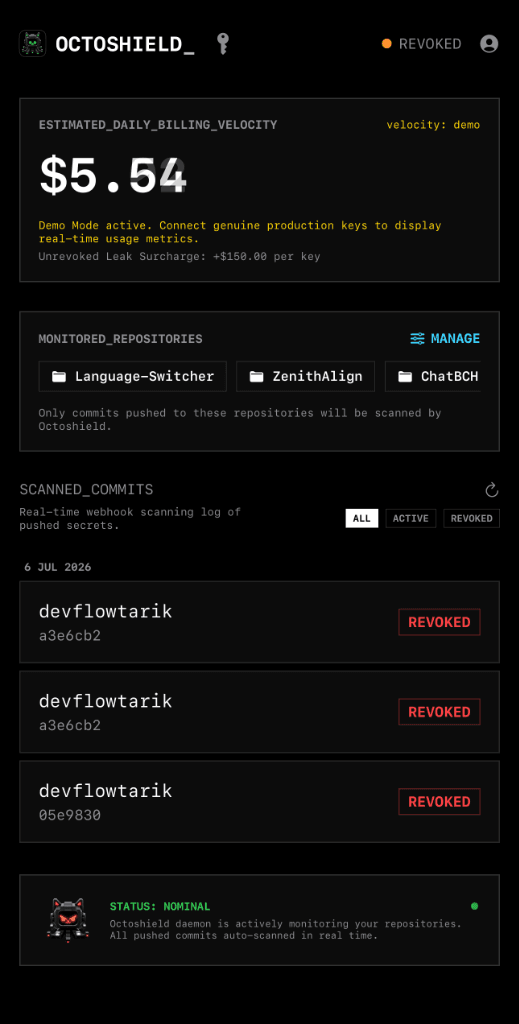
Octoshield in your pocket.
Monitor leaks and manage credentials on the go with our native iOS app.