DeepSeek V4 for Code Security: Automated Patching in Orbital Network Firmware
DeepSeek V4 for Code Security: Automated Patching in Orbital Network Firmware
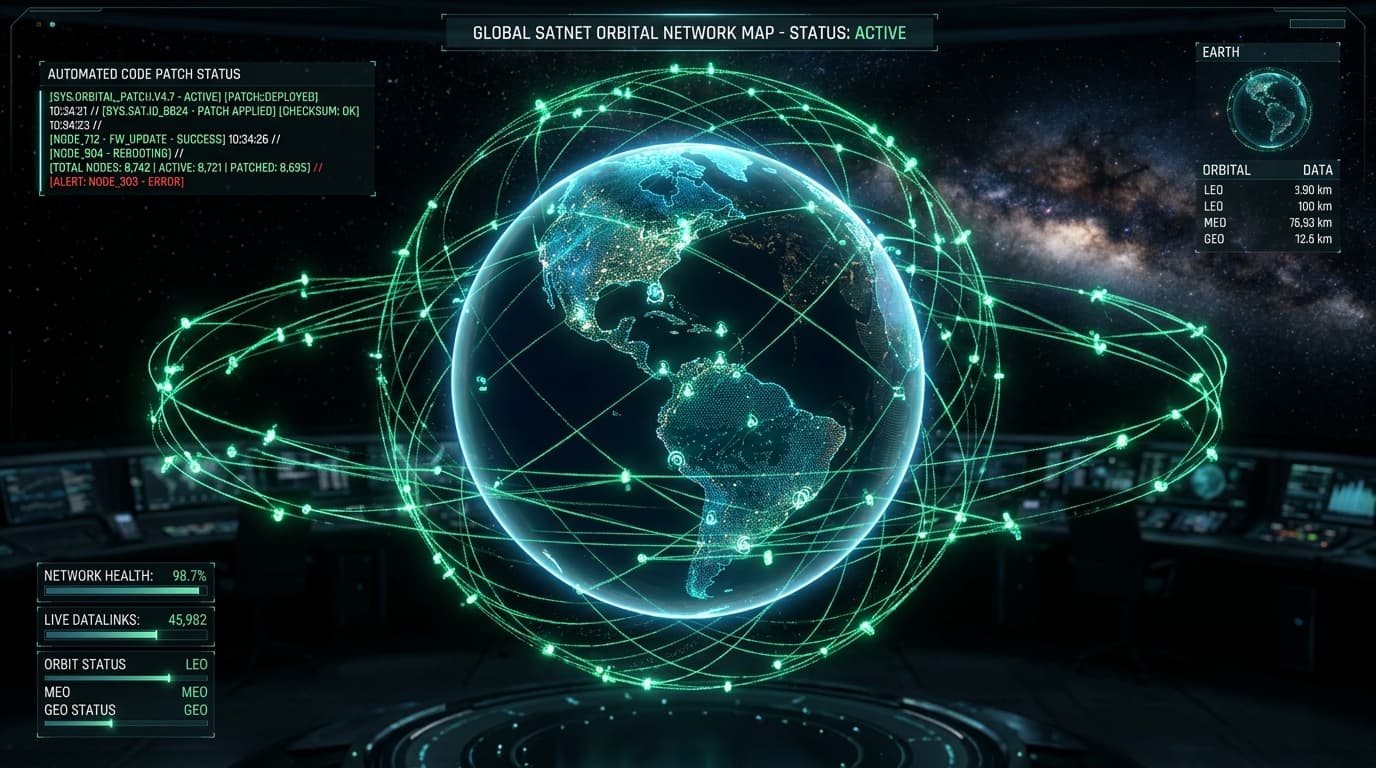
Managing software security across distributed hardware systems—such as orbital satellite communication networks—is incredibly challenging. In 2026, security patches must be compiled, tested, and deployed in real-time across thousands of low-Earth orbit (LEO) edge nodes. To keep pace with emerging zero-day vulnerabilities, engineering teams are deploying DeepSeek V4 for code security to automate patch remediation.
While utilizing DeepSeek V4 for code security offers rapid response capabilities, introducing an AI agent to auto-generate and inject patches directly into critical system firmware raises critical security questions: How do we verify that the generated patch doesn't introduce a secondary security vulnerability or, worse, a backdoor?
The Shift to Automated Vulnerability Repair
Traditional vulnerability management is slow: a CVE is published, security analysts triage it, developers write a fix, QA tests it, and operations deploys it. In an orbital network, a 24-hour delay in patching a telemetry vulnerability can result in satellite hijacking.
DeepSeek V4 is optimized specifically for deep code understanding and security remediation. It ingests static analysis report files (JSON logs from security scanners) and matches them with the corresponding repository files. It then writes a targeted diff block to fix the vulnerability (e.g., removing a buffer overflow or replacing an insecure hash algorithm).
The Danger: Subverting the Patch Process
AI models are trained on public datasets that may contain insecure code patterns. When generating a security patch, the AI might replace a vulnerability with a secondary issue that is harder to detect.
For instance, to fix a cross-site scripting (XSS) vulnerability, the AI might add an escaping function that inadvertently introduces a denial-of-service vector due to regex backtracking (ReDoS).
AI-Assisted Backdoor Insertion If an attacker compromises your logging infrastructure and feeds the AI scanner spoofed vulnerability reports, they could manipulate the patch generation system. The AI, believing it is resolving an issue, could generate a patch that opens a remote execution shell for the attacker.
Architecting Safe Patch Pipelines
To safely deploy DeepSeek V4 for code security in mission-critical networks, engineering teams must implement a multi-layered verification pipeline.
1. Dual-Model Cross-Validation
Never let a single AI model dictate security changes. Implement a verification process where:
- Model A (DeepSeek V4) generates the proposed patch.
- Model B (e.g., Claude Fable) receives the original code and the patch, and is tasked with finding new security flaws introduced by the change.
- The patch is approved only if Model B certifies it as secure.
2. Differential Fuzzing in Virtual Sandboxes
Before applying a patch to orbital hardware, compile the updated firmware in a virtual test environment (such as a local digital twin). Run automated differential fuzzing tests to ensure the updated code handles anomalous inputs exactly like the original code, without crashing or exposing memory.
Verifying Code Authenticity with Octoshield Automated patching systems frequently generate configuration variables or require temporary access tokens. It is crucial to ensure these keys do not get baked into the final build artifact. By using Octoshield to monitor the output of DeepSeek V4, you can guarantee that any generated scripts remain free of hardcoded credentials before they are compiled and pushed to your edge node network.
Conclusion
Automated vulnerability patching using DeepSeek V4 for code security represents the future of real-time systems defense. However, we must treat AI-generated patches with the same zero-trust philosophy applied to third-party code. By using multi-model validation and automated build-phase secret scanning, we can deploy secure, self-healing networks that operate at the speed of modern threats.
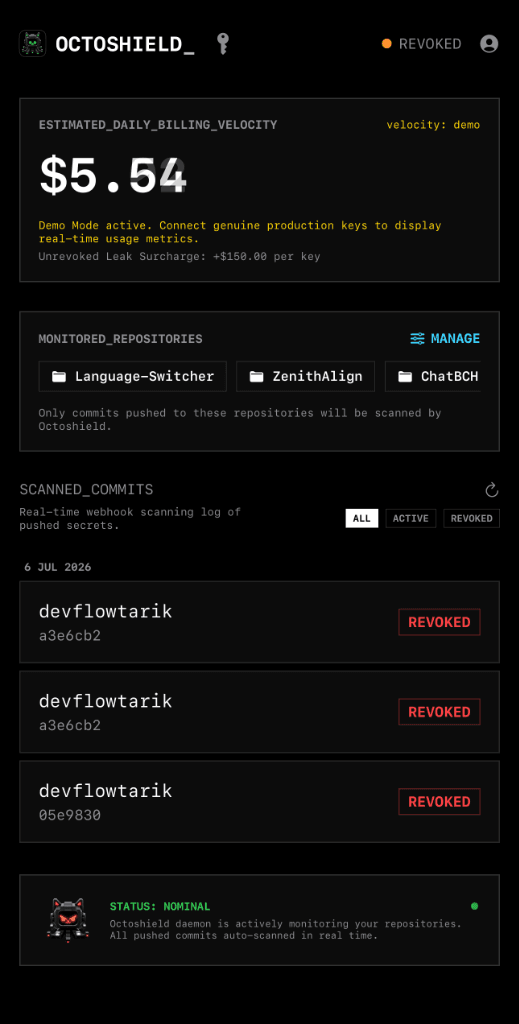
Octoshield in your pocket.
Monitor leaks and manage credentials on the go with our native iOS app.