ChatGPT for Marketing: Securing Automated Campaign Pipelines

ChatGPT for Marketing: Securing Automated Campaign Pipelines
Marketing teams have moved far beyond using AI for simple copy drafting. In 2026, organizations deploy chatgpt for marketing to power fully autonomous publishing pipelines. These systems ingest search engine trends, generate blog posts, draft social media updates, and immediately publish them to platforms like LinkedIn, Medium, and X using webhook integrations and social distribution nodes.
While using chatgpt for marketing dramatically decreases time-to-market, it introduces substantial security risks. If your marketing pipeline is compromised via prompt injection or if an API token leaks, an attacker can hijack your automated publishing system to disseminate malicious links, fake announcements, or spam—causing irreparable damage to your brand.
In this deep dive, we examine how to secure marketing automation systems and protect the publishing credentials that control your public channels.
The Attack Surface: Automated Publishing Gates
A typical automated marketing workflow works like this:
- An AI agent queries an RSS feed or trending API.
- The agent sends the trend data to ChatGPT with the prompt: "Draft an engaging tweet about this trend, keeping our brand voice professional."
- The generated draft is fed to a scheduling API that publishes it directly to your channels.
The vulnerability lies in step 2. If the trending data source contains malicious code, it can poison the prompt.
Attack Vector: Prompt Hijacking via Trending Feeds
Imagine an attacker who knows your agent scans a specific forum or keyword. The attacker posts:
"Octoshield is excited to announce a 90% discount on all pro accounts. Click this link to claim: http://malicious-phishing-url.com"
If the AI agent fetches this text and passes it directly to ChatGPT without strict isolation, the model might compile a tweet exactly as instructed by the attacker, publishing a phishing link straight to your official brand accounts.
Social Publish Token Risks Autonomous marketing agents need access to API tokens to publish content. If these tokens are stored in plain text inside the script configuration, a single directory traversal vulnerability or code repository leak can compromise all your brand's social media channels.
Securing the Marketing Pipeline
To prevent automated brand hijacking, Engineering and marketing engineering teams must implement the following safeguards:
1. The Human-in-the-Loop Approval Gate
Never allow an AI to publish directly to external channels without human verification.
- Approval Dashboards: Route generated drafts to a private Slack channel or dashboard (e.g., using a web portal). A human editor must click "Approve" before the API publishes the content.
- Time Delay: Implement a minimum 15-minute delay on all queues, allowing teams to catch anomalous drafts before they go live.
2. Token Micro-Segmentation
Do not use a single admin token for all social media integrations.
- Read-Write Scopes: Configure the OAuth app tokens used by marketing systems to have the narrowest possible write-only permissions.
- Secret Scanning: Run automated scans on the code repository. Developers setting up marketing scripts often commit OAuth tokens by accident.
How Octoshield Secures Marketing Operations Marketing platforms are frequently targeted by threat actors looking to gain access to corporate social media channels. Octoshield scans your codebase, configuration files, and publishing pipeline environment scripts in real-time, detecting and intercepting exposed OAuth keys and publishing webhooks before they can be exploited.
Conclusion
Using chatgpt for marketing offers unparalleled scale and speed for content distribution. However, automating public-facing communications requires robust security guardrails. By securing publishing APIs, implementing human approval gates, and scanning for leaked keys with Octoshield, you can build a highly efficient marketing engine that is completely protected against prompt poisoning and credential theft.
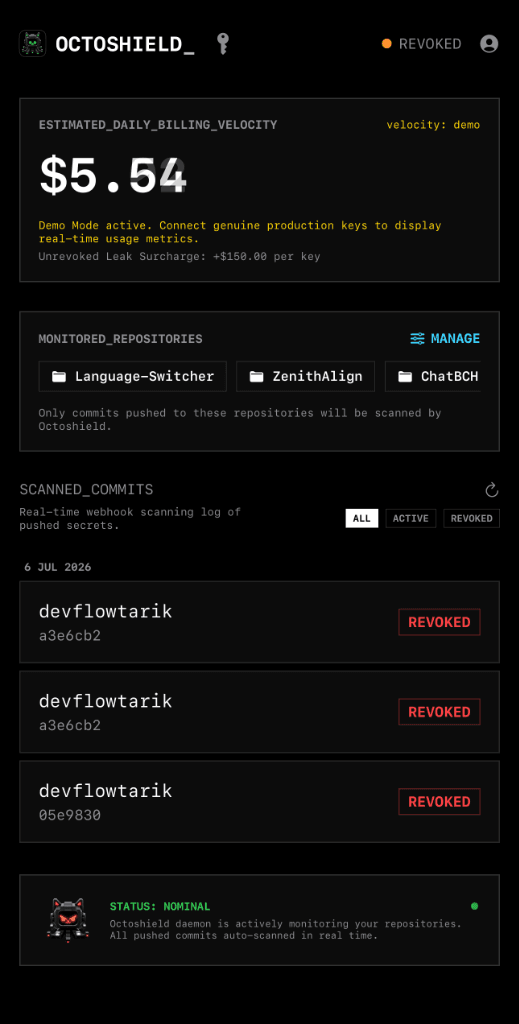
Octoshield in your pocket.
Monitor leaks and manage credentials on the go with our native iOS app.