Biometric Authentication in Zero-Gravity Environments
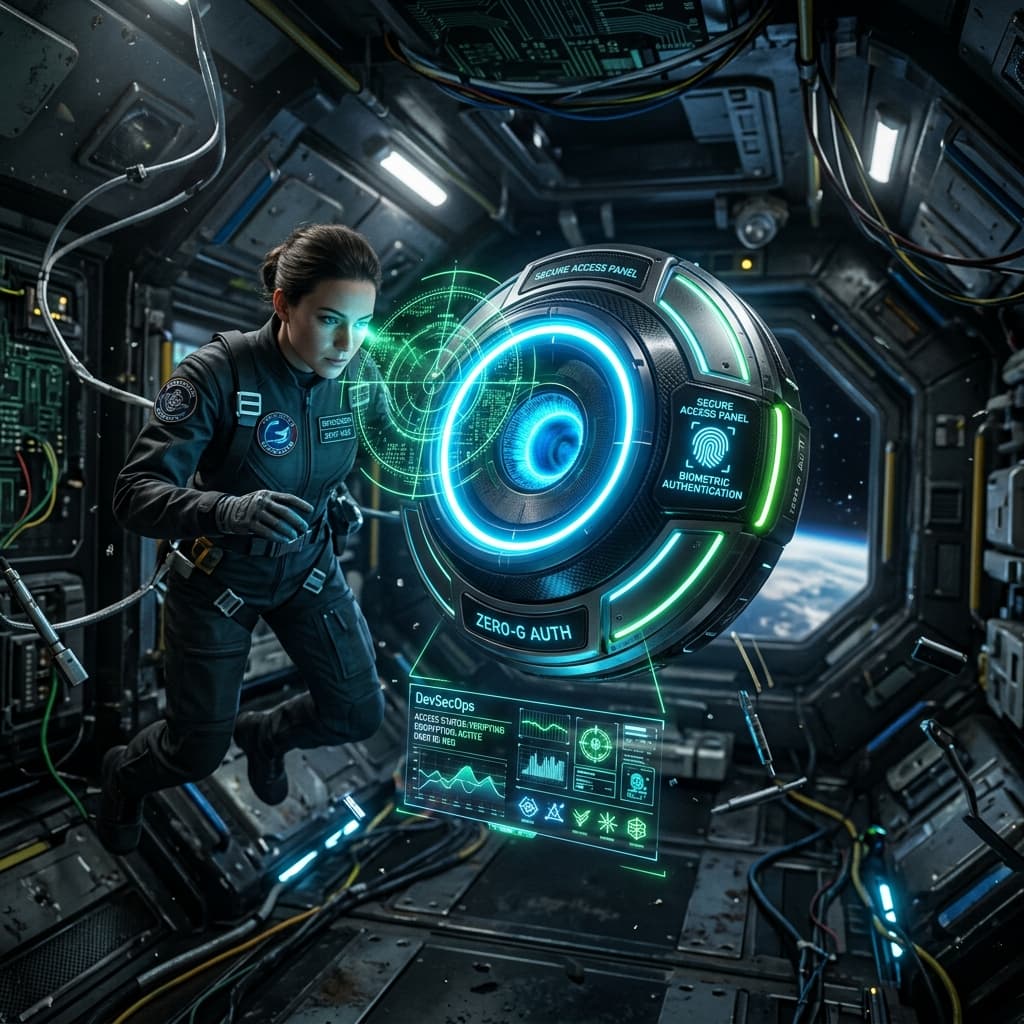
Biometric Authentication in Zero-Gravity Environments
Terrestrial physical security relies heavily on gravity. We walk through turnstiles, place our fingers firmly on optical scanners, and stand still for facial recognition cameras. But how do you authenticate a user when they are floating in mid-air, spinning slightly on their axis, and experiencing microgravity-induced facial fluid shifts?
The zero-gravity biometric challenges are immense. In this article, we explore the cutting-edge of continuous authentication in space and how organizations are rethinking physical identity in orbit.
The Failure of Traditional Biometrics
1. Facial Recognition and Fluid Shifts
In microgravity, the human body undergoes a phenomenon called "fluid shift," where bodily fluids redistribute from the lower body to the upper body and head. This causes facial puffiness, altering the geometric topography of the user's face. Standard terrestrial facial recognition algorithms will frequently fail to match a crew member's face to their pre-flight baseline.
2. Fingerprint Scanning in Freefall
Capillary fingerprint scanners require a specific amount of pressure to register the ridges and valleys of a fingerprint. In zero gravity, maintaining that precise pressure without pushing yourself away from the scanner requires physical tethers. Furthermore, the constant recycling of air in space stations dries out the skin, reducing the conductivity needed for capacitive scanners.
The Future: Continuous Authentication
To solve these zero-gravity biometric challenges, security engineers are moving away from point-in-time authentication (like scanning a finger at a door) toward continuous authentication in space.
Gait Analysis... Without Walking?
On Earth, gait analysis identifies people by how they walk. In space, engineers have developed "Kinetic Signature Analysis." Accelerometers in the crew's smart suits analyze the unique ways individuals push off bulkheads, stabilize themselves, and arrest their momentum. This kinetic signature is as unique as a fingerprint and requires no active input from the user.
Heart Rate Variability (HRV) and Electrocardiogram (ECG)
Wearable sensors continuously monitor the user's ECG and HRV. Because the shape of a person's heart and their specific electrical rhythms are unique, a smart suit can continuously verify the wearer's identity and transmit a cryptographic token to the station's access points via near-field communication (NFC). If the suit is removed, the token is revoked instantly.
Conclusion
Securing physical access in orbital environments requires discarding terrestrial assumptions. By embracing continuous authentication in space and adapting to zero-gravity biometric challenges, we can ensure that only authorized personnel have access to critical gravity-generation controls, even while floating upside down.
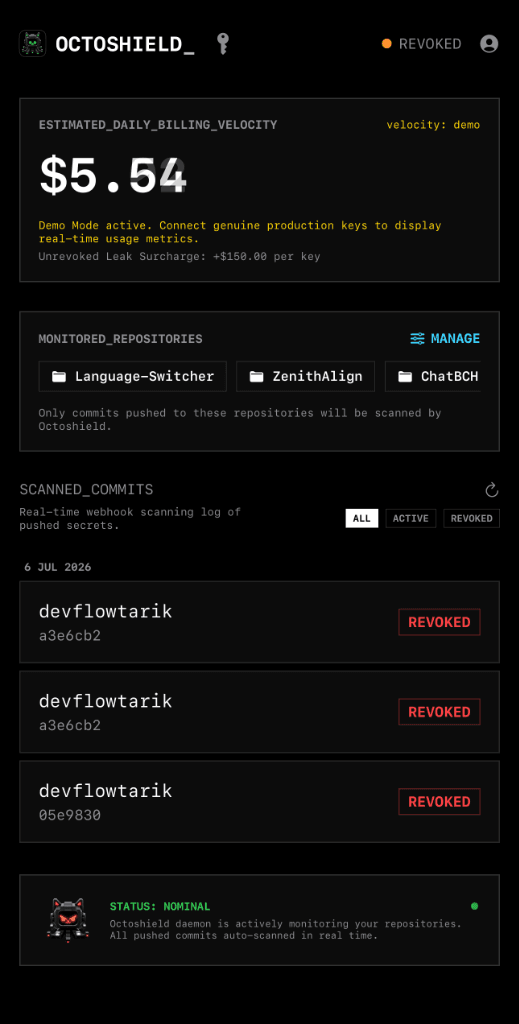
Octoshield in your pocket.
Monitor leaks and manage credentials on the go with our native iOS app.